



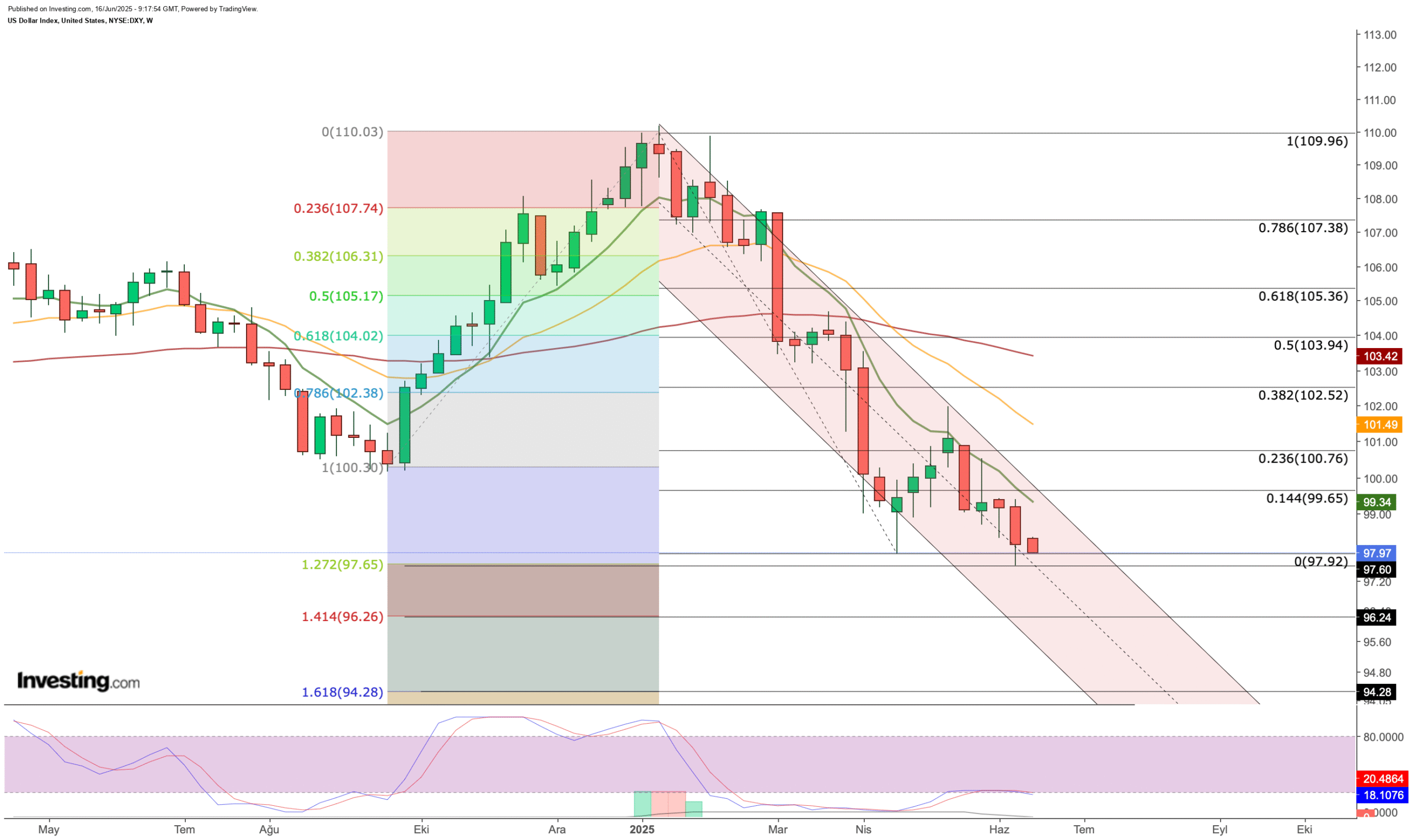
In recent times, the financial markets have been walking on eggshells, with the US dollar attempting to maintain its stability amidst the tumult of global affairs. Hovering around the 98 mark, the dollar has exhibited resilience in the face of mounting geopolitical tensions and a Federal Reserve adopting a stance of caution. The focal point of financial analysts and investors alike is the trifecta of Federal Reserve projections, fluctuations in energy markets, and the diplomatic undercurrents hinting at future policy directions emanating from the Group of Seven (G7) meetings.
The valuation of the dollar is a barometer of not only the United States’ economic health but also of global financial stability and geopolitical sentiment. Recent developments have seen it poised precariously close to the 98 threshold, endeavoring to sustain its position despite downward pressure. The undercurrents of tension between Israel and Iran, escalating to attacks on vital energy infrastructure, have added a layer of complexity, intertwining geopolitical strife with financial market dynamics. This burgeoning conflict threatens to ripple through to the global arena, possibly influencing the dollar’s international demand trajectory.
The Strait of Hormuz, a strategic arterial route for a significant portion of the world’s oil trade, hangs in the balance as Iran signals potential disruptions. Such a move could trigger a resurgence in oil prices, exerting inflationary pressures that could compel the Federal Reserve to reevaluate its monetary policy roadmap.
The Federal Reserve finds itself at a crossroads, with interest rate decisions looming. The anticipation revolves around maintaining current rates, with keen eyes on the Fed’s economic outlook and policy language for hints of future rate adjustments. The juxtaposition of weakening domestic economic indicators against a backdrop of escalating geopolitical uncertainty has led to recalibrated expectations of a rate reduction, with a shift in market sentiment reducing the likelihood of an imminent cut.
This week’s economic reports, encompassing job numbers, retail indicators, and inflation metrics, will be scrutinized for indications of economic resilience. Favorable data may bolster the dollar by suggesting a potential delay in anticipated rate cuts, thereby influencing the Federal Reserve’s stance.
However, the dollar’s trajectory remains encumbered by systemic challenges. The depreciation observed since its peak earlier in the year, particularly against the euro and currencies of nations enriched by surging commodity prices, underscores the vulnerabilities facing the dollar. European Central Bank’s prudent approach to monetary policy, combined with heightened energy prices, has shifted currency dynamics. Furthermore, domestic policy actions, including fiscal expansion, tax adjustments, and potential tariffs, could exacerbate the structural fragilities within the US economy, casting shadows over the dollar’s stature as a global reserve currency.
Amidst these challenges, the near-term outlook for the dollar is buttressed by geopolitical uncertainties and a cautious Federal Reserve, although inherent weaknesses signal a tentative path ahead. As it teeters around a critical juncture, the currency’s fate hangs in balance, with potential for both a short-lived reprieve and a prolonged period of vulnerability, exacerbated by trade deficits and anticipations of monetary easing.
In this environment of global risk aversion, the direction of the US dollar will be influenced not only by domestic policy decisions but also by the broader political landscape. As investors and analysts dissect the Federal Reserve’s forthcoming decisions, energy market dynamics, and signals from international forums such as the G7 Summit, the intricate interplay of these factors will dictate the immediate financial narrative.
Turning to technical analysis, the US dollar demonstrates a struggle to maintain support against a backdrop of declining momentum from earlier in the year. A decisive breach below identified support levels could hasten the currency’s downward trajectory. Conversely, resilience at these thresholds could pave the way for short-term recoveries, contingent upon heightened demand. However, the overarching technical perspective suggests a cautious approach, with prevailing indicators highlighting ongoing weakness in demand for the dollar.
In conclusion, navigating the current landscape requires a nuanced understanding of the multifaceted drivers influencing the dollar. For those seeking to demystify market movements and uncover investment opportunities amidst uncertainty, InvestingPro offers an array of tools designed to enhance decision-making. From AI-driven stock picks to comprehensive valuation metrics and advanced screening capabilities, InvestingPro empowers investors and traders to chart a course through volatile markets with confidence.
In the vast ocean of financial markets, where currents of geopolitical tensions and policy decisions shape the fortunes of currencies, the US dollar’s journey reflects the ebb and flow of these underlying forces. As we witness the unfolding of this narrative, the broader implications for global financial stability and economic policy remain to be seen, underscoring the interconnectedness of our modern world.
Disclaimer: This article provides an informative perspective on the fluctuations of the US dollar and its implications within the broader financial and geopolitical context. It does not serve as financial advice or an endorsement of specific investment strategies. Readers should consider multiple viewpoints and acknowledge the inherent risks before making investment decisions.
