



In recent developments, the decision-making authority has taken a stance to keep monetary policies unchanged for the time being, attributing this pause to concerns over potential long-term inflationary pressures that might arise from imposed tariffs. Despite this forewarning, data collected up until May has shown an unexpected trend; consumer price inflation has not spiked as anticipated, demonstrating a weaker linkage between tariffs and consumer pricing than previously theorised.
One possible interpretation of this trend suggests it might be too premature to witness the direct impacts of tariffs on pricing. Alternatively, it could indicate a scenario where demand elasticity is curbing the ability to transfer tariff costs onto consumers. If tariffs indeed have a diminished effect on consumer inflation, this could lead to more lenient monetary policies moving forward within the year.
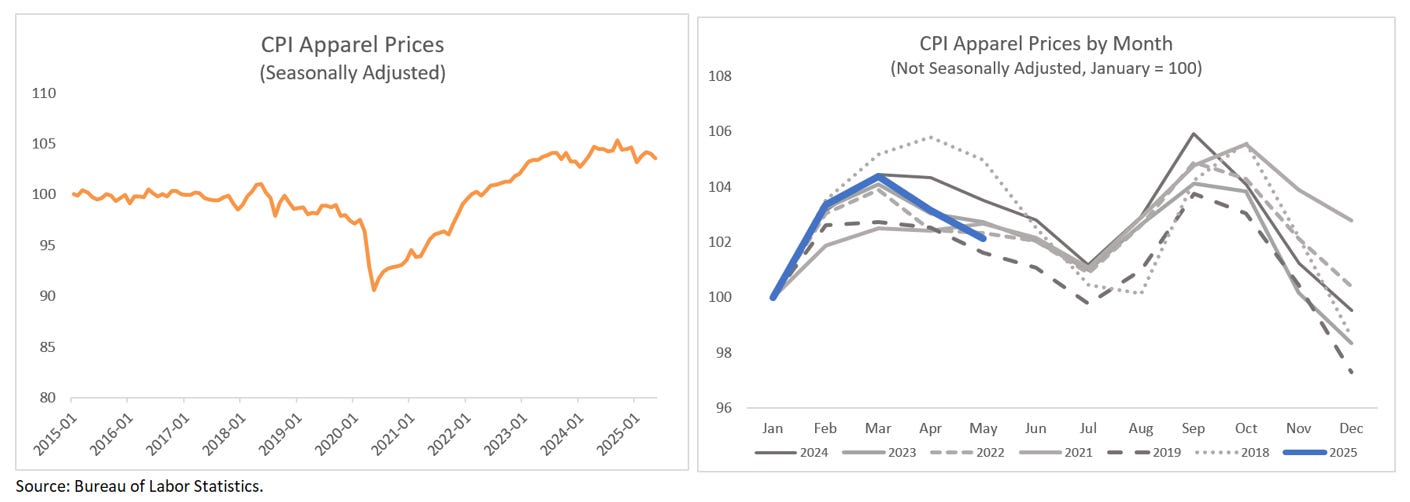
Delving into the specifics, a recent anomaly caught the attention of analysts – the cost of apparel, a commodity heavily reliant on imports, has seen a decrease over the last couple of months. This revelation is particularly striking, given the sector’s vulnerability to tariff-induced cost increments. The analysis herein aims to unravel the path tariffs take through the economic landscape while offering insights specific to the apparel industry. It’s worth noting that expenditure on clothing represents a marginal portion of total consumer spending, approximately 2.5%, thus it alone won’t resolve the ongoing debates about tariff-induced inflation risks. Nevertheless, the current trends in apparel pricing indeed counter some of the more dire predictions.
Notably, consumers have yet to experience an uptick in clothing costs. Data indicates that apparel prices have dropped by 0.4% in April, marking a consistent decline over recent months. This is against the grain of expectations, especially considering the tariff hikes implemented earlier in the year alongside the industry’s heavy dependence on international sourcing.
Interestingly, even after adjusting for seasonal variations, data still showcases a decline in apparel prices, despite predictions to the contrary due to the industry’s nature. With the time-lagged nature of production and delivery in this sector, tariffs are expected to play a more significant role in pricing strategies later on. For instance, a report from the Boston District highlighted that a clothing retailer preemptively increased its prices to cover anticipated tariff costs, with such priced items expected to reach store shelves by summer.
Yet, there’s evidence suggesting that not all tariff costs are passed directly onto consumers. One strategy involves the absorption of tariffs by domestic importers, potentially through negotiations leading to reduced prices charged by foreign manufacturers. This shift aligns with observed trends, where import prices for apparel have dropped by nearly 3% through May. This suggests that foreign producers are indeed sharing a portion of the tariff burden.
Moreover, tariff collections have been scaling up, albeit more slowly than the rate hikes might suggest. This is partly because businesses have found ways to mitigate some of the immediate financial impacts of these tariffs, hence reducing the necessity to raise consumer prices sharply. The effective rate on apparel imports has seen significant increases, yet the real implications of these changes are still being felt gradually.
Profit margins within the apparel sector have remained relatively stable, despite the tariff-induced costs. This stability suggests that businesses might be absorbing some of these additional expenses, a move that could further delay any direct impact on consumer prices. These dynamics underscore the complexity of predicting tariff impacts on consumer pricing, where various factors including demand elasticity, production cycles, and strategic pricing decisions interplay.
An academic perspective offered by Professor Sheng Lu further elucidates this complexity, indicating that the vast majority of retail price fluctuations can be attributed to factors beyond tariffs, primarily historical pricing patterns and market demand. This underscores the notion that while tariffs do impose additional costs, their direct influence on consumer prices is modulated by a broader spectrum of market dynamics.
In an environment where consumer demand exhibits sensitivity, the case of apparel pricing serves as a reminder of the innate complexities in predicting inflation trends. It raises questions about the immediate and visible effects of tariffs on consumer prices across different sectors. As the discussion continues, the Federal Reserve’s stance and interpretations of this data will be pivotal in shaping the broader economic outlook.
In conclusion, whilst initially positioned as a preventive measure against runaway inflation, the current stance on monetary policy reflects a cautious approach towards managing inflationary risks, with a keen eye on the unfolding impacts of tariffs. This careful navigation underscores the inherent uncertainties in gauging the immediate influence of tariffs on consumer pricing, making it a subject of continued scrutiny and debate within economic circles.
