The Enduring Influence of Leonard Lauder and the Questioning of the “Lipstick Index”
On the 14th of June 2025, the beauty and cosmetics industry lost a towering figure, Leonard Lauder, the Chairman of Estée Lauder Companies. Lauder, who curiously formulated the “Lipstick Index” during the financial crisis of 2008, leaves behind a legacy that intertwines closely with economic theories and consumer behaviour. This phenomenon of the Lipstick Index posited that in times of economic distress, consumers would pivot towards less costly indulgences, like cosmetics, as a means to preserve a sense of luxury, albeit in a more financially palatable manner. This theory found validation through subsequent economic downturns, most notably the Great Depression, among others.
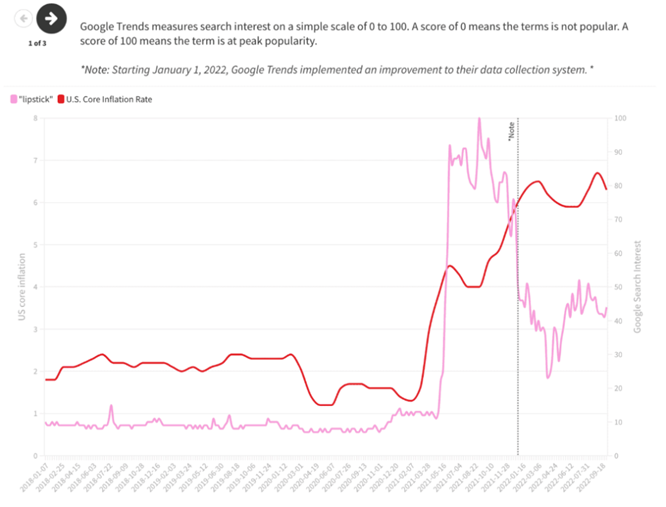
However, recent financial disclosures from leading cosmetics companies suggest a possible deviation from this once steadfast economic indicator. Such shifts prompt a pertinent inquiry: Is the Lipstick Index still a relevant barometer for today’s economic climate?
Prelude to the Lipstick Index
The germination of the Lipstick Index theory occurred amidst the emergence of economic downturns, wherein traditional consumer spending behaviours exhibited marked retrenchment. It was during such a period, notably the global financial crisis of 2008, that Leonard Lauder observed a counterintuitive resilience in lipstick sales amidst a general decline in personal spending on luxuries.
This observation birthed the notion that economic headwinds propelled consumers towards more accessible luxury commodities, exemplifying a nuanced form of emotional and financial solace sought in cosmetic indulgence.
Similar patterns surfaced across diverse segments of the consumer market. For instance, the economic fallout following the 2008 crisis saw a surge in so-called “recession hair,” a trend signifying a shift towards low-maintenance hair styles aimed at minimizing salon expenses. The underpinnings of Lauder’s theory seemed to find echoes in various consumer behaviour shifts during economic crunch times, substantiating the allure of affordable luxuries during tough financial periods.
Notwithstanding, the applicability of the Lipstick Index has come under scrutiny, especially in light of prevailing economic conditions marked by inflation and shifts in consumer spending priorities. A notable trend divergence occurred in the wake of the Covid-19 pandemic; despite historical precedence, lip cosmetic sales saw a decline, attributed to the consumer pivot towards skincare products over traditional makeup.
Economic Landscape and Consumer Adaptations
The landscape of consumerism, particularly within the beauty sector, has undergone significant evolution. A burgeoning digital marketplace, combined with rapid technological advancements, has recalibrated the way brands engage with their consumers and how consumers, in turn, prioritize their spending.
Moreover, the premises upon which the Lipstick Index was founded, manifest during distinctly different economic conditions when compared to current times characterized by high inflation and subdued economic growth. This evolving economic tapestry compels a nuanced understanding of consumer priorities, which now seem to diverge from the simplistic switch towards affordable luxuries in the face of financial constraints.
Social media and the quest for authenticity and individualized experiences amongst consumers, particularly within younger demographics, underline a shift towards value-driven consumption. Brands that successfully harness the ethos of authenticity, innovation, and aligned consumer values tend to forge a deeper resonance with their target markets, as evidenced by the phenomena of Korean beauty (K-beauty) and strategic brand acquisitions like e.l.f. Beauty’s procurement of Hailey Bieber’s Rhode skincare line.
K-beauty and Strategic Brand Movements
The steadfast ascendancy of K-beauty in the global cosmetics market underscores a departure from traditional Western beauty paradigms. This segment’s emphasis on natural ingredients, innovative formulations, and engaging packaging has captured the imagination and wallets of a younger, more discerning consumer base seeking both efficacy and enjoyment in their beauty routines.
Parallelly, strategic movements such as e.l.f. Beauty’s acquisition reflect an industry in flux, actively navigating through changing consumer preferences and economic realities. Such maneuvers signify a proactive stance towards capitalizing on unique brand propositions that resonate with emerging consumer sensibilities.
In Summary
The pondering over the continuing relevance of the Lipstick Index in today’s economic and consumer landscape invites a broader contemplation of the interplay between consumer psychology, economic conditions, and industry innovation. Leonard Lauder’s contribution, through the conceptualization of the Lipstick Index, remains an integral reflection on how beauty and consumer products can serve as nuanced indicators of economic sentiment.
As the beauty industry evolves amidst shifting economic tides and transformative consumer expectations, the core essence of the Lipstick Index—seeking affordable luxuries in times of economic distress—may still hold sway but requires adaptation and reinterpretation in light of the nuanced dynamics of modern consumerism.
The legacy of Leonard Lauder and his Lipstick Index endures not as an immutable economic marker but as a foundational perspective encouraging continuous interrogation into the intricate relationship between economic conditions and consumer behaviour.