



In a thoughtful exploration titled “The High Beta Melt-Up: Echoes of 1999,” we delve into the intriguing possibility that the stock market might be on the cusp of a melt-up phase. This phenomenon is characterized by investors’ rampant speculative activities and their quest for exponential returns, gravitating towards stocks with high betas known for their volatility.
It is imperative to state from the outset that ascertaining whether we are indeed in the midst of a melt-up phase is not straightforward. The current market dynamics could merely be a demonstration of a short-lived appetite for risk. Furthermore, supposing we are experiencing a melt-up, it is challenging to predict whether we are approaching its culmination or if significant gains still lie ahead.
What is clear, however, is the marked shift in the market’s sentiment towards riskier, speculative ventures since the lows of April. History teaches us that such phases inevitably draw to a close. The conclusion might mirror the dot-com era’s broad market meltdown and the subsequent bust of high beta stocks. Conversely, the broader stock indices may withstand the impact relatively unscathed if more value-oriented, lower-beta stocks manage to offset the losses from their more speculative counterparts.
Seeking insights into our current predicament, we find it instructive to revisit the dot-com melt-up of 1999. The parallels between then and now are not only fascinating but also hold valuable lessons.
The famous lyrics by Prince, conceptualized in 1982 and envisioning a countdown to the new millennium with the words “party over,” unwittingly mirrored the stock market’s trajectory as the dot-com bubble burst shortly after the dawn of 2000. This era was marked by growing enthusiasm over the internet’s economic possibilities and potential profits, sending shockwaves of hype throughout the investor community.
From 1995 to its zenith in early 2000, the NASDAQ surged by over 200%. This rise was notably punctuated by a significant market dip in 1998, triggered by the Long Term Capital hedge fund failure and the Russian default, which collectively led to a roughly 20% market downturn. Yet, from the depths of October 8, 1998, the market soared, reclaiming nearly 70% by March 2000.
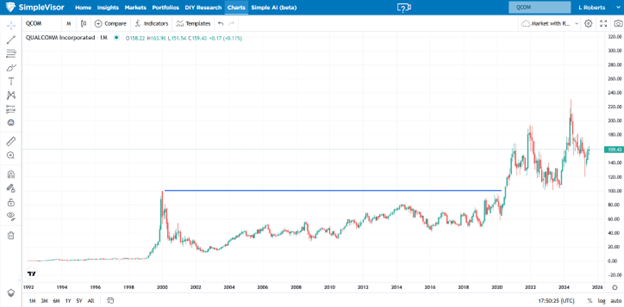
The year 1999, particularly, stood out for the explosion in value of some of the riskiest and most speculative stocks. Names like Qualcomm, Commerce One, BroadVision, and Metricom saw their stock prices skyrocket, embodying the era’s speculative frenzy. However, the subsequent collapse revealed the perils of such speculative excess. For instance, Commerce One and Metricom plummeted into bankruptcy, BroadVision was delisted, and Qualcomm, despite surviving, took 20 years to revisit its peak prices.
The speculative fervor of 1999 is exemplified by the dramatic shift in market sentiment, favoring high-beta stocks post the 1998 downturn. This period underscores the volatile and unpredictable nature of high-beta investments during market bubbles.
Fast forward to the present, we observe intriguing similarities with the 1999 melt-up phase. Recent market dynamics have shown an increased favor towards speculative stocks, particularly in sectors like AI and cryptocurrencies. These emerging domains are captivating investors, seduced by the allure of significant earnings and revenue growth potential. Yet, the specter of potential losses looms large, reminiscent of the late 1990s.
Analyzing the current high-beta market rally through the lens of daily pricing data from ETFs offers an updated perspective on this speculative trend. The recent outperformance of high-beta stocks post the April lows stands as a testament to the market’s speculative turn, echoing the dot-com bubble’s speculative fervor.
This reflection on the speculative market cycles, past and present, invites contemplation on the nature of investor behavior and market dynamics. The interplay between technological innovation, market speculation, and economic factors presents a complex landscape for investors navigating the uncertainties of high-beta investments.
Despite the inherent risks, the lure of significant returns continues to drive speculative behavior in the stock market. The question that remains is how long this wave of risk-taking will persist and the extent of its eventual repercussions on the broader market and individual investors alike.
The lessons from the past, particularly the dot-com era, coupled with the current market dynamics, underscore the importance of cautious speculation and the perennial quest for sustainable returns in the ever-volatile stock market landscape.
