In the aftermath of the recent quarterly employment report, New Zealand finds its labour market under the microscope. The nation, known for its picturesque landscapes and vibrant economy, delved into its latest labour statistics, revealing nuanced insights that caught many by surprise and others with a nod to anticipated forecasts. What emerged was a complex tale of a job market that, while showing resilience in parts, also disclosed signs of slackening under the pressures of changing economic winds.
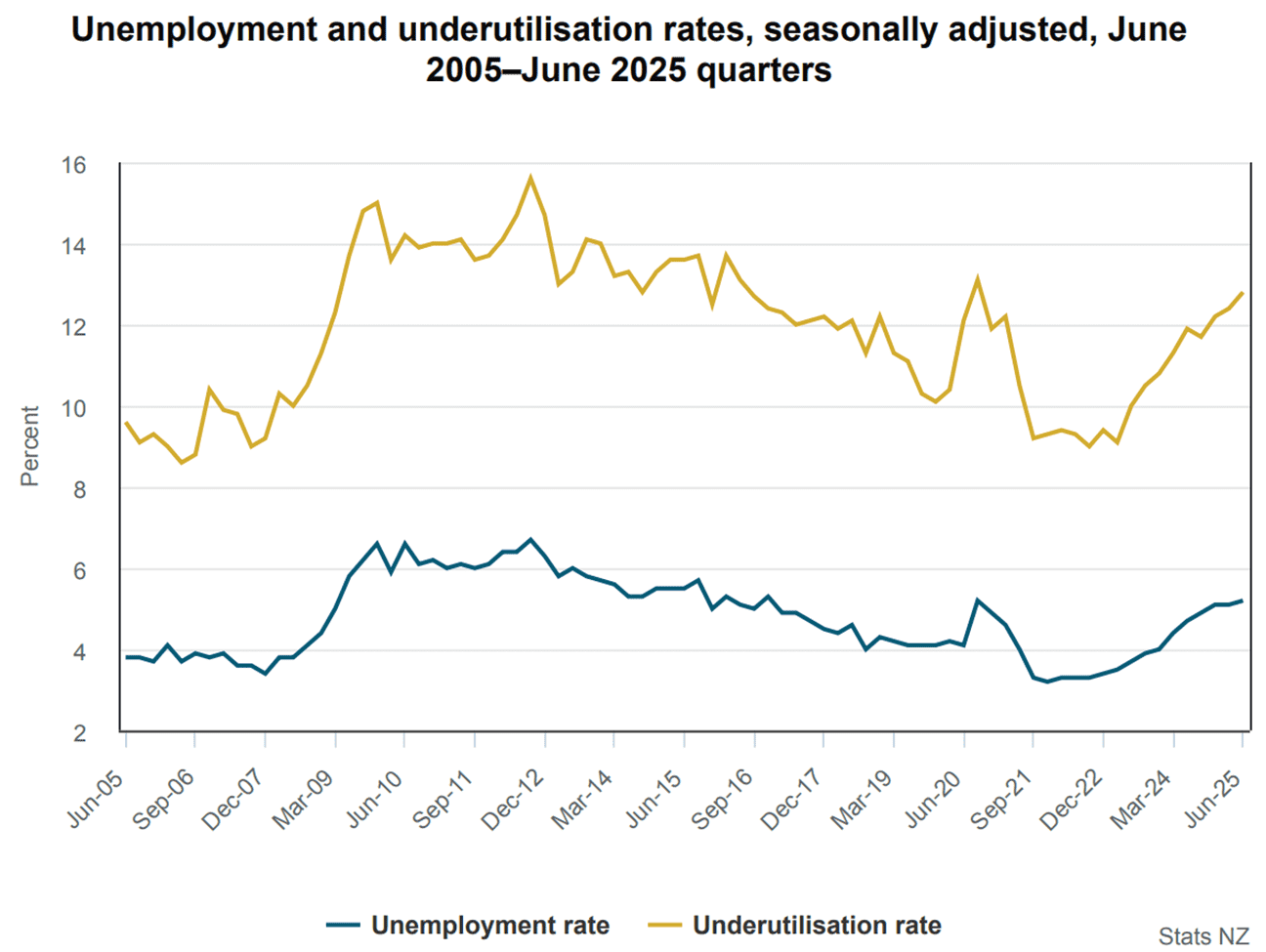
The headline figure that drew immediate attention was the unemployment rate, which nudged upward to 5.2%, a slight increase from the previous quarter’s 5.1%. This adjustment, albeit marginal, nevertheless outperformed market prognostications, albeit with details that expose a soft underbelly in the employment sector. The prognosticators at the Reserve Bank of New Zealand (RBNZ) had pegged their expectations at this very figure, aligning with their forecasts and illustrating a nuanced understanding of the country’s labour dynamics.
The intrigue deepens when considering the shifts in both employment and participation metrics. Employment dipped by 0.1%, a figure contrary to the RBNZ’s optimistic forecast of a 0.2% uptick. This drop, though seemingly slight, is indicative of deeper contextual challenges facing the New Zealand workforce. Alongside this, the participation rate receded to 70.5%, falling short of the central bank’s anticipations of 70.8%. This decrease in participation is a notable bellwether, highlighting that a segment of the potential workforce is on the sidelines, further encapsulating the nuanced challenges within the employment landscape.
The concept of underutilisation, encompassing the unemployed, the underemployed, and those on the periphery of the labour market, climbed to 12.8% from 12.4% in the preceding quarter. Such a rise underscores a growing disconnect or slack within the job market, wherein individuals are either seeking more work than available or have become disenchanted by their prospects, thus exacerbating the complexities facing policymakers.
Moreover, the report shone a light on the plight of youth employment, which steadfastly remained at 12.9%. This constancy speaks volumes, illustrating the disproportionate impact an unyielding job market has on younger individuals, often seen as the most adaptable yet vulnerable segment within the workforce.
In the realm of wages, the increase in private sector pay excluding bonuses was recorded at a modest 2.2% on an annual basis. This rate of wage growth, falling just below the anticipated 2.3%, signals contained wage pressures, a silver lining for inflation watchers but a mixed blessing for workers navigating the cost of living.
From a broader perspective, these details, when pieced together, sketch a portrait of a labour market that, while not in dire straits, is clearly grappling with a mix of challenges. For market observers and policymakers alike, these subtle yet significant signals underscore the imperative of nuanced policy responses designed to stimulate employment without overheating other sectors of the economy.
The currency markets, ever sensitive to shifts in economic indicators, saw the New Zealand dollar (NZD) make slight gains against its US counterpart following the unemployment data release. However, the underlying trends hint at a cautious optimism at best, with the RBNZ’s cash rate projections serving as a crucial backdrop to these developments. With swap markets gravitating around a 2.75% base rate, the unfolding labour market story adds layers to the potential monetary policy trajectory.
The NZD/USD pair, amidst these economic undercurrents, has demonstrated patterns that warrant close observation. Trading towards the lower spectrum of its recent range, the currency pair’s behaviour captures the market’s digestion of both domestic and international economic cues. Technical analysts, delving into the charts, highlight momentum signals and support levels that offer a glimpse into the currency’s short to mid-term outlook, framing a narrative of cautious trading strategies in the face of nuanced economic signals.
The unfolding saga of New Zealand’s job market is a microcosm of the broader global economic narrative. As nations navigate the post-pandemic recovery, the interplay of employment dynamics, wage pressures, and monetary policy decisions remains a captivating subplot, with implications that ripple beyond shores. For New Zealand, a country celebrated for its economic resilience and quality of life, the coming quarters will be telling, as it seeks to balance growth with stability, and opportunity with inclusiveness, in its ongoing economic journey.