



As society grapples with the rapidly evolving landscape of technology, one particular advancement stands at the forefront: artificial intelligence (AI). The integration of AI into various sectors is transforming the traditional modus operandi, streamlining operations, and inadvertently shaping the future of employment. This change, though daunting for the workforce, harbors promising prospects for investors, particularly those with an eye for dividends.
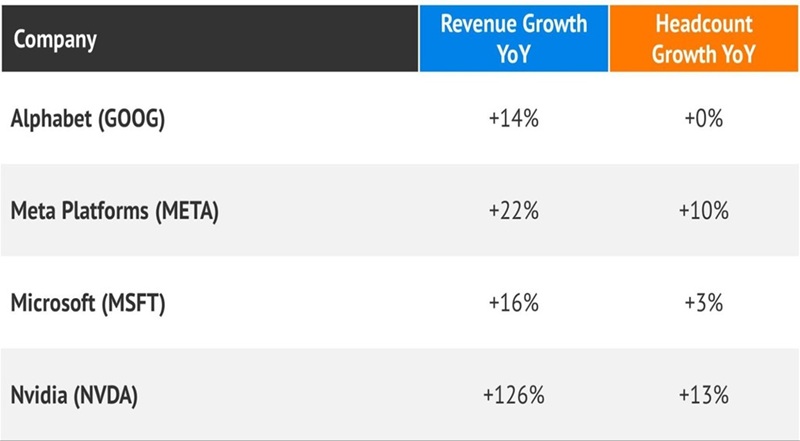
The crux of the matter lies in the phenomenon termed as “growth-without-hiring,” a trend that has gained momentum with the advent of AI. This trend underscores a paradigm shift where companies are increasingly able to expand their revenue streams without proportionately increasing their headcount, thanks to the efficiencies ushered in by AI technologies. Notably, such advancements are propelling corporations towards higher profit margins, concurrently paving the way for substantial income opportunities in the realm of investments.
To the uninitiated, the prospect of AI fuelling dividend growth may appear counterintuitive at first glance. Artificial Intelligence, after all, has been a mixed bag in public discourse, with its fair share of controversies ranging from copyright infringements to rather humorous anecdotes involving fast-food orders. Nonetheless, a deeper dive reveals AI’s significant potential to contribute to dividend growth, debunking the myth of AI stocks being barren landscapes for dividend seekers.
Contrary to what most might believe, the magic of AI doesn’t solely reside in the superficial allure of chatbots and other consumer-facing technologies. It extends into more nuanced applications that are revolutionizing industries. For instance, FedEx’s Surround system exemplifies AI’s application in logistics, optimizing the delivery of time-sensitive shipments by predicting potential delays and recalibrating routes accordingly. Meanwhile, Meta Platforms is leveraging AI to democratize high-caliber advertising, enabling small businesses to execute sophisticated ad campaigns that were previously the preserve of entities with deep pockets.
As the tech sector continues to blaze this trail, it’s evident that the ramifications of these innovations extend beyond the confines of Silicon Valley. The corporate landscape is witnessing a recalibration, where revenue growth is increasingly decoupled from workforce expansion. This is reflected in the operational metrics of tech giants such as Meta and Alphabet, which have reported significant revenue upticks without a corresponding surge in employee numbers. NVIDIA stands out as an exception, where a substantial increase in headcount was justified by an explosive growth in sales, underscoring the nuanced impact of AI across different contexts.
For investors keen on capitalizing on this “growth-without-hiring” dynamism, certain investment vehicles present an attractive proposition. Closed-end funds (CEFs) emerge as a particularly compelling avenue, offering investors the dual benefits of significant dividends and the potential for capital appreciation. These funds, characterized by their ability to pay outsize dividends and trade at discounts to their net asset value (NAV), typically comprise a mix of AI technology providers and integrators, reflecting the symbiotic relationship between AI’s advancements and dividend growth.
Among the multitude of options, a selective approach can unveil gems that not only promise robust dividend yields but also the prospect of capital gains. For instance, the Columbia Seligman Premium Technology Growth Fund showcases an emphasis on tech stalwarts and tech-adjacent companies, boasting a notable dividend yield supported by a strategy of selling call options against its portfolio holdings. Similarly, the Nuveen NASDAQ 100 Dynamic Overwrite Fund and the Gabelli Dividend & Income Trust highlight the diversity and potential of AI-infused investment strategies across various sectors including finance, showcasing significant discounts to NAV and steady dividend payouts.
In essence, the intersection of AI and dividend investing encapsulates an evolving narrative where technology not only reshapes business models but also redefines investment paradigms. For savvy investors, these developments herald an era of income opportunities hitherto unexplored, against the backdrop of a digital revolution. As AI continues to permeate various facets of the economy, the synergy between technological innovation and investment strategy becomes increasingly profound, offering a roadmap for navigating the complexities of the modern financial landscape.
This analysis serves not only as a testament to AI’s transformative potential but also as a guide for investors seeking to leverage these dynamics for income generation. Amidst the uncertainties of technological disruption, dividend-focused investment strategies that harness the power of AI offer a beacon of resilience, promising to redefine the contours of investor portfolios in the years to come.
