In an unexpected shift during the overnight session, financial markets experienced a flurry of activity as new investments poured in. This surge came in anticipation of crucial interest rate decisions from global Central Banks and against the backdrop of escalating tensions in the Middle East, notably between Israel and Iran. These two nations have engaged in indirect confrontations through proxy wars since October 7, 2023, but the situation dramatically intensified last Thursday when Israel launched a direct assault on Iranian nuclear facilities. This aggressive move was in response to intelligence suggesting Iran was mere days away from completing an atomic bomb, a development that could significantly alter the regional power dynamics.
Given the historical significance and the potential for these conflicts to reshape international relations, it’s crucial to delve into the nuances of the situation. Israel, known for its formidable intelligence capabilities and military prowess, evidently decided that a preemptive strike was necessary to thwart Iran’s nuclear ambitions. Iran, on the other hand, has been a subject of global scrutiny over its nuclear program, which it insists is for peaceful purposes, despite widespread skepticism.
The reaction in global markets to these developments was reminiscent of previous geopolitical crises, most notably a similar situation in August 2024, where initial panic in financial markets was quickly followed by a robust recovery. Investors seem to have adapted a discerning approach to geopolitical events, focusing on several key factors that signal limited long-term impact on global economies and markets:
1. The conflict, while severe, does not extend beyond the regional borders, avoiding a broader Middle Eastern or global conflict.
2. Iran’s retaliatory capabilities, though significant, have historically not translated into decisive military actions that shift the strategic balance.
3. Crucially, the involvement of the United States and other G7 nations has been restrained, preventing the conflict from escalating into a larger global confrontation.
Market dynamics during the Asia-Morning session reflected this nuanced understanding. Index Futures, after a positive opening, experienced fluctuations but underscored a resilient sentiment among investors who have quickly moved beyond the initial risk-off tone observed in similar situations in the past, including the upheaval in August 2024.
Despite the severity of Israel’s strikes on Iranian military capabilities, Iran’s response has been measured, with its defensive and offensive infrastructure sustaining significant damages. The conflict has seen the deployment of over 700 ballistic missiles, resulting in civilian casualties and raising alarm. However, the strategic containment of these escalations has allowed global markets to remain relatively stable.
Global indices have seen upward movements of around 0.70% and above, and commodity markets, initially rocked by the prospect of war and the ensuing supply fears, have settled. This resilience in the face of geopolitical uncertainty underscores a broader trend in market behavior; risk-off trading phases, driven by immediate reactions to unexpected events, have become shorter as investors become more adept at navigating through crises. The quick switch to risk-on attitudes reflects a belief that the current conflict, while serious, will not have a prolonged impact on global economic stability.
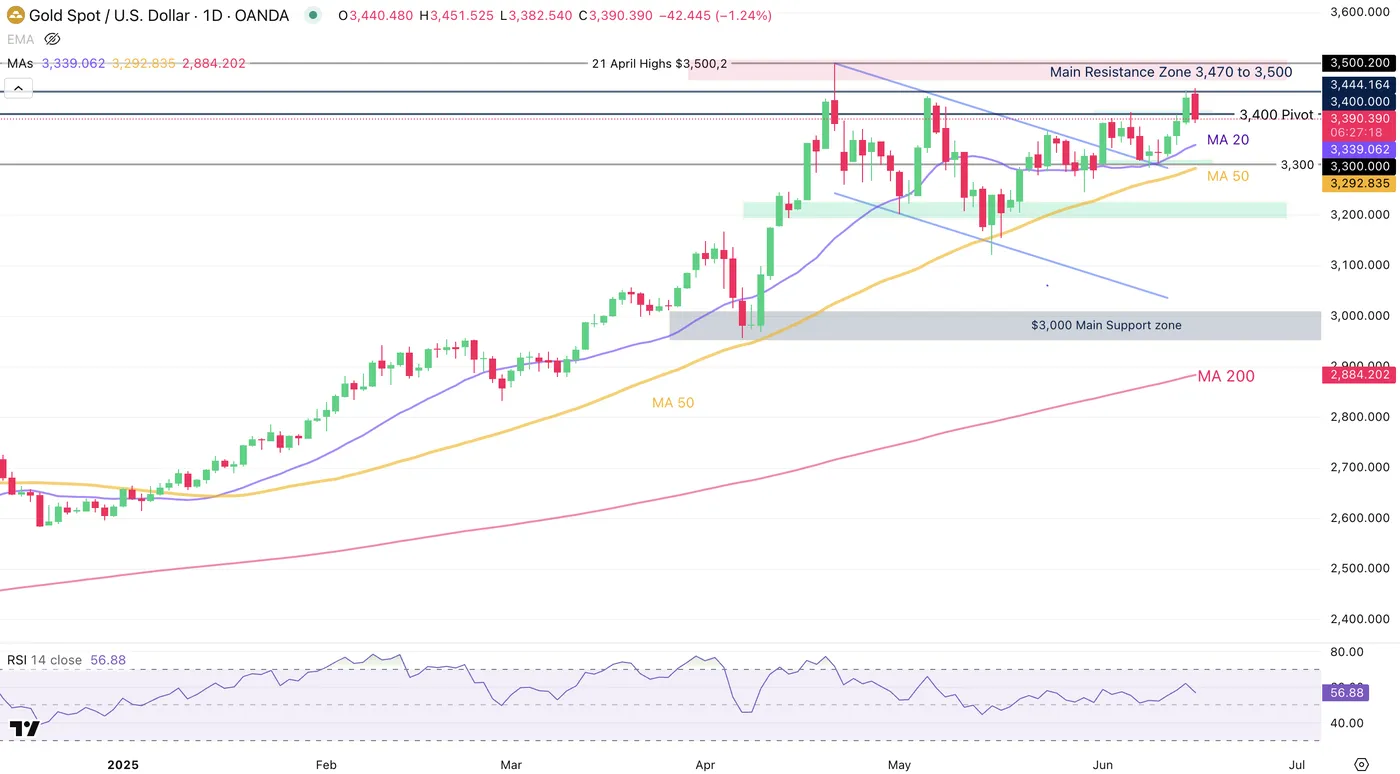
The article would be remiss without an analysis of gold, a classic safe-haven asset, which often reacts sensitively to geopolitical tensions. The current situation has seen gold prices fluctuating, as evidenced by the technical analysis from daily to hourly charts. While gold reached for resistance levels in the wake of the conflict, the prevailing positive sentiment and the swift market recovery have since led to a period of consolidation. The daily moving averages suggest that while immediate bullish momentum may have stalled, the broader outlook remains cautiously optimistic.
Taking a closer look at the gold market dynamics through various chart analyses offers an intriguing glimpse into investor sentiment during times of crisis. From the daily to the hourly perspectives, gold’s reaction to the unfolding events highlights the complex interplay between geopolitical events and financial markets. Resistance and support levels offer technical markers for traders, but the underlying trends reveal much about the global economic landscape’s resilience.
In conclusion, the ongoing conflict between Israel and Iran, set against the broader context of an anticipative financial market, underscores the intricate relationship between geopolitics and global economics. As the situation evolves, the adaptability of markets and the strategic responses of nations involved will continue to be topics of keen interest for investors, policymakers, and observers worldwide.