Today marks the release of the highly anticipated Consumer Price Index (CPI) report for May in the United States. This metric, watched closely by investors globally, is a fundamental indicator of inflationary trends within the economy. It is projected that the headline annual inflation rate will climb by 2.5%, with the core CPI, which excludes volatile components such as food and energy prices, expected to rise by 2.9%.
In an environment where equity markets are flirting with record heights, the impending data release injects a measure of uncertainty. Investors are advised to steel themselves for potential fluctuations in the market.
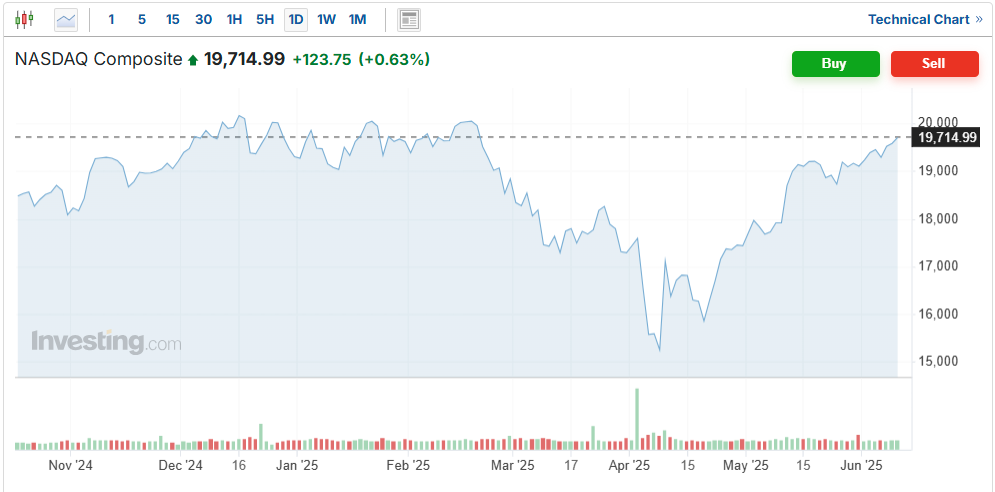
But what exactly is at stake with this new data release? Understanding the consequences requires a dive into the backdrop of the current economic landscape. At a time when markets are posting significant gains—with the Dow Jones Industrial Average experiencing a 10% increase over the past month and the Nasdaq Composite climbing 6.7%—the pressure is on for data to align with investor expectations.
The timing of this report is critical. The United States, under the administration of then-President Donald Trump, embarked on an aggressive trade policy, introducing tariffs that were met with reciprocal measures by trading partners, most notably China. This trade war context makes the May CPI report not just a measure of consumer prices but a litmus test for the real-world effects of these tariffs on the economy.
Expectations are set for the CPI to have expanded slightly from April’s year-over-year increase of 2.3% to 2.5% in May. The core CPI is also anticipated to have inched higher, from 2.8% to 2.9% year over year.
But why do these numbers matter?
In the complex dance of economic indicators and market performance, CPI figures serve as a key input for the Federal Reserve’s monetary policy decisions. The Fed has maintained interest rates at a range of 4.25%–4.50% since December 2024, adopting a cautious stance in response to mixed signals on inflation and employment. With tariffs potentially exerting upward pressure on prices, the May CPI report could significantly influence the Fed’s next move.
Indeed, futures traders are betting on the likelihood of a rate cut come September, contingent on the CPI data reflecting contained inflation. A surprise uptick in inflation could arrest the Fed’s easing trajectory, potentially halting cuts or adopting a wait-and-see approach. Conversely, subdued inflation may clear the path for a rate reduction, a move broadly anticipated by markets.
The implications extend beyond the Fed’s interest rate policy. Equity markets, especially tech-heavy indices like the Nasdaq, are sensitive to changes in interest rate expectations. A softer CPI figure may signal a green light for a continued rally, whereas stronger-than-expected inflation could pose a headwind, particularly for rate-sensitive and high-valuation tech stocks.
Moreover, Treasury yields, which have recently spiked to 4.5% amid tariff-induced uncertainty, will also be in focus. A cooler inflation report could alleviate yield pressures, buoying bonds and equities alike.
In essence, the May CPI report is poised to deliver critical insights into the interplay between inflationary pressures and growth amid an ongoing trade standoff. A hotter-than-expected inflation read could send ripples through the markets, complicating the Fed’s rate path and heightening stagflation risks. In contrast, a cooler reading would bolster hopes for monetary easing and support equity advances.
As these dynamics unfold, access to sophisticated analytical tools and insights becomes paramount for investors seeking to navigate the volatility. Services such as InvestingPro offer users the ability to tap into a wealth of resources, from AI-generated stock picks and valuation tools to advanced screeners and insights into the strategies of leading investors.
Amidst the challenging market environment, bolstered by tariff uncertainties and rate speculation, the rewards of informed, data-driven investment strategies are substantial. Leveraging platforms like InvestingPro can unlock these opportunities while mitigating risks, providing a strategic edge in the volatile landscapes ahead.
It is essential, however, for investors to conduct their due diligence and not take any analysis as direct investment advice. Instead, these insights should form part of a broader, well-considered strategy that takes into account a comprehensive risk assessment of the macroeconomic climate and individual financial standings.
As we navigate these uncertain times, the insights provided by platforms like InvestingPro, coupled with a keen awareness of the broader economic and geopolitical backdrop, will be invaluable for those looking to make informed investment decisions.