





In the wake of escalating tensions in the Middle East, financial markets responded unpredictably. Despite the potential for conflict between Israel and Iran intensifying, markets showed resilience. On a surprising note, the S&P 500, a barometer of stock market health, shrugged off negative anticipations by opening 0.7% higher after an initial dip, reversing its late Friday pullback. This performance suggests a nuanced picture of global financial markets—one that intertwines geopolitical anxieties with economic fundamentals and investor sentiment.
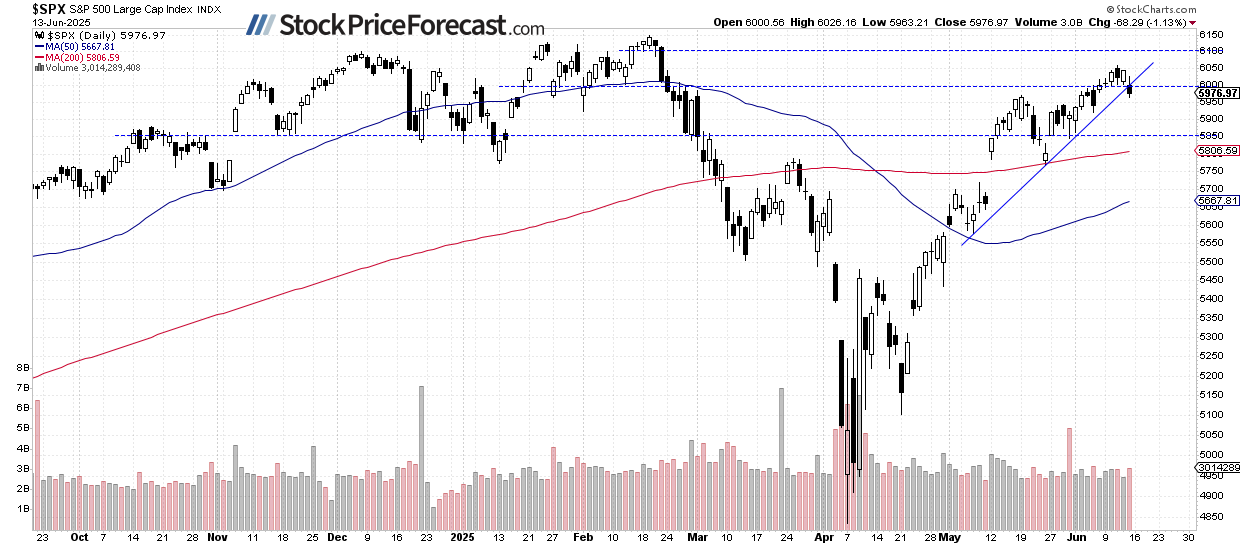
Last week, the markets experienced volatility following the rise in tensions in the Middle East, particularly between Israel and Iran, leading to a tentative trading atmosphere. On Friday, the S&P 500 receded 1.13%, retreating below the 6,000 mark as it succumbed to the pressure of the escalating conflict. This recent downturn raises questions about whether we’re witnessing a brief market correction or the beginning of a more sustained downturn. However, the rebound observed today implies a robustness in the markets, suggesting perhaps the concerns were overly pessimistic or that investors are looking beyond the immediate geopolitical tensions.
Analysis suggests that the situation might represent a short-term market adjustment rather than a long-term decline. It’s crucial to note that, despite the geopolitical fireworks, the markets have not yet flipped to decisively negative signals. Looking ahead, the Federal Open Market Committee (FOMC) decision, anticipated this Wednesday, looms large over market sentiments, indicating that factors beyond the Middle East are at play in shaping investor sentiment.
Investor optimism remains tangible, as indicated by the latest AAII Investor Sentiment Survey. This survey showed a bullish inclination among 36.7% of individual investors, with bearish sentiment trailing at 33.6%. Such figures underscore a cautiously optimistic outlook, even in the shadow of geopolitical unrest.
Technical indicators, however, revealed some worrisome signs last Friday when the S&P 500 breached its upward trend line. This breach prompts technical vigilance, even as the index closed only 0.39% lower for the week, suggesting a consolidation period rather than a bearish reversal.
Comparatively, the Nasdaq 100 exhibited a starker decline, falling 1.29% last Friday, with the tech sector’s weaknesses particularly pronounced. Nevertheless, the index showed signs of a nascent recovery before succumbing to downward pressure later in the day. This situation underscores the fragile balance markets are currently navigating, with support and resistance levels being closely watched by traders and analysts alike.
The Volatility Index (VIX), often referred to as the market’s “fear gauge,” provides revealing insights into investor sentiment. A precipitous rise in the VIX to a local high of 22.00 last Friday from a low of 16.23 the preceding Wednesday, suggests a spike in market anxiety due to the intensifying geopolitical situation. Historically, the VIX’s movements offer clues to market directions, with higher values generally pointing to potential upward market reversals as fear peaks and subsides.
S&P 500 futures also indicate the market’s effort to regain stability, with a notable early morning rebound suggesting resilience in face of pressures. The resistance and support levels mapped by recent trading patterns signify a consolidation phase, potentially laying the groundwork for future movements.
In conclusion, the past week’s market activities reflect a complex interplay of geopolitical anxieties, economic anticipation, and strategic positioning ahead of significant monetary policy announcements. Despite a jittery response to heightened tensions in the Middle East, particularly regarding the Israel-Iran conflict, markets demonstrated an underlying resilience. With critical economic data and the FOMC decision on the horizon, investors are poised at a juncture that balances cautious optimism with vigilance against unfolding global events.
This recent episode in the financial markets underscores the intricate dynamics that bind geopolitical developments with economic fundamentals, investor sentiment, and technical indicators. As the week unfolds, the anticipation of the FOMC’s decision will offer further clarity on market directions, potentially overshadowing current geopolitical concerns and setting a new course for investor strategies.

