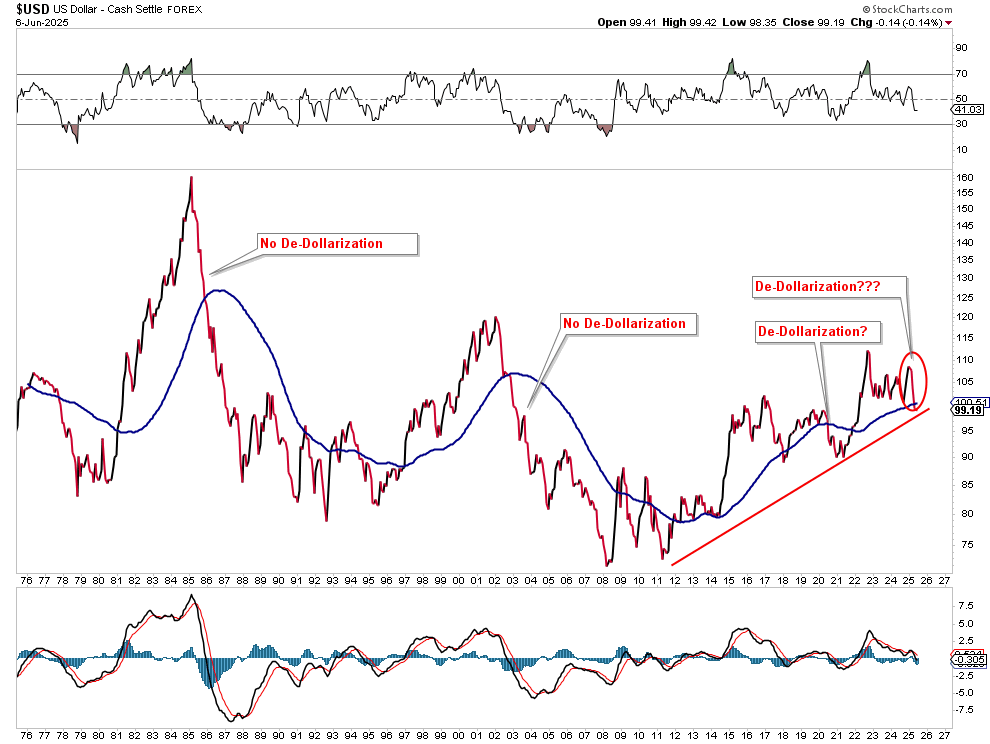
In recent times, a burgeoning narrative has cast shadows on the future of the US dollar as the linchpin of global finance. Speculation about the “demise of the dollar” being imminent has surged, especially during periods of its depreciation against other major currencies. Drawing from past analyses that debunked similar claims in 2023, it becomes evident that such assertions tend to surface amidst geopolitical strains, economic upheavals, or notable market volatilities.
Despite the waves of concern, historical context reveals that the fluctuating value of the dollar falls within expected norms. In instances past, its declines were significantly steeper, yet they did not trigger the level of alarmism currently propagated by doomsayers. It’s crucial to recognise that while the dialogue on the diminishing dominance of the US dollar raises valid points, the discourse often exaggerates the implications, suggesting a catastrophic economic downfall that is far from immediate.
The endurance of the US dollar at the heart of global finance is underpinned by structural, economic, and geopolitical fabric that does not change overnight. An exploration into this topic unveils several key reasons why the narrative around the dollar’s demise might be overstated.
1. The Challenge of Finding an Equitable Alternative:
The paramount position of the US dollar is upheld by the absence of a formidable competitor. The Euro, which constitutes about 20% of global reserves—a distant second to the dollar’s staggering ~58%—faces constraints due to the fragmented nature of the Eurozone’s bond markets and political instabilities. The Chinese Yuan, despite its growing usage, is hampered by capital controls and limited convertibility, sidelining it as a global reserve contender. Other currencies, including the Japanese Yen or minor ones like the Canadian or Australian dollars, do not possess the necessary economic scale or liquidity to mount a significant challenge. This leaves the dollar in a relatively secure position, bolstered by trust and deeply liquid markets, making its near-term decline improbable.
2. The Strength of the US Economy:
The US economy, which accounts for a quarter of global GDP, anchors the dollar’s supremacy. Its dynamic nature, supported by the rule of law and robust capital markets, makes the dollar a sanctuary during times of global instability. Although the rising national debt in the US is a point of critique, the nation’s reserve currency status facilitates borrowing at favourable rates, enabling the sustenance of deficits without ushering an immediate crisis. The economic stability offered by the US, compared to others, diminishes the likelihood of the dollar’s downfall in the near future.
3. Network Effects and Global Financial Inertia:
The widespread usage of the dollar amplifies its value through network effects. Transitioning to an alternative currency would necessitate extensive coordination and bear considerable costs and risks. Historical transitions, such as the move from the British Pound to the US Dollar, spanned decades and were precipitated by significant geopolitical shifts. Current global financial inertia suggests that any move away from the dollar is a distant prospect.
4. Limited Impact of De-Dollarization Efforts:
While nations like China, Russia, and the BRICS bloc advocate for trading in local currencies, these movements have limited global repercussions. The gradual decline in the dollar’s reserve share reflects diversification rather than downfall, often into aligned currencies. China, with roughly $2 trillion in dollar-denominated assets, underscores its reliance on the dollar, indicating that geopolitical endeavors to shift away from the dollar have yet to gather the momentum required to challenge its status significantly.
5. Resilience in the Face of Policy Challenges:
Dollar critics point to US policies, including tariffs, sanctions, and Federal Reserve actions, as undermining confidence. However, such fluctuations are often cyclical rather than structural. For instance, the tariffs introduced in 2025 led to a temporary dip in the dollar’s value, yet its robustness remains evident when observed over a broader period. Sanctions and Federal Reserve measures have further cemented the dollar’s role during crises, underlining its continued relevance in the global financial ecosystem.
In the backdrop of these discussions, it’s imperative to acknowledge that the US dollar still forms the bedrock of global currency transactions. However, emerging signs indicate the dollar’s decline may be nearing a pivot, setting the stage for potential revitalization. Historical patterns suggest the dollar’s resilience even amid speculative narratives of its demise. As analysts peer into the future, considering factors like central bank policies and the resulting shifts in global investment flows, it becomes clear that the intrigue surrounding the dollar is far from a resolved story.
The discussions around the dollar’s longevity and global economic implications extend beyond academic corridors into the realm of everyday investors and policymakers. While the impending “death of the dollar” fuels attention and debate across platforms, it is essential to navigate these conversations with balanced scrutiny and understanding of the underlying dynamics at play. This equips investors, analysts, and enthusiasts alike to discern between momentary fluctuations and the enduring pillars that uphold the US dollar’s central role in the world’s financial architecture.