In a remarkable turn of events recently, a significant development unfolded that many market enthusiasts seemed to overlook, a development with far-reaching implications that could reshape the geopolitical landscape of the Middle East. Over the past weekend, a scenario unfolded that seemed like it was lifted straight from the pages of a high-stakes international thriller. The United States escalated its longstanding tensions with Iran by launching a direct bombing raid on Iran’s nuclear facilities. Utilising the formidable B-2 stealth bombers, along with the deployment of potent bunker-buster bombs, the U.S. made a bold and decisive move, marking a formal engagement in what many analysts are now referring to as the most perilous Middle East crisis witnessed in several decades.
This unprecedented action did not go without a significant retaliatory threat from Iran. The Iranian parliament reportedly rallied behind the warning to close off the Strait of Hormuz. This strait is not just any waterway; it’s a critical artery for the global oil market, with approximately 20 million barrels of oil passing through it daily. This accounts for a staggering fifth of all global oil shipments. In essence, Iran’s threat to close the Strait of Hormuz can be likened to a strategic move to choke the world’s economic lifeline. Should Iran proceed to disrupt oil exports or if it attempts to blockade the Strait, the ripple effects on the global oil market could be devastating, potentially triggering an existential crisis.
Amid this looming chaos, the global financial markets have presented an array of responses. Most notably, gold – typically seen as a bastion of stability in times of geopolitical unrest – has exhibited a surprisingly tepid response. In the immediate aftermath of the U.S. airstrikes, gold’s value dipped by about 2%, failing to rally as might be expected in such tense circumstances. At the time of this analysis, gold has seen a decrease of around $8, a movement that defies traditional market expectations during periods of geopolitical strife.
This lackluster performance of gold in the face of potentially world-altering events raises critical questions about its current role and perceived value as a safe-haven asset. Historically, gold prices have surged in times of crisis, acting as a hedge against geopolitical risk and uncertainty. However, its unexpected dip, even as military actions were underway, hints at a deeper, more systemic issue within the gold market that belies its traditional appeal during times of distress.
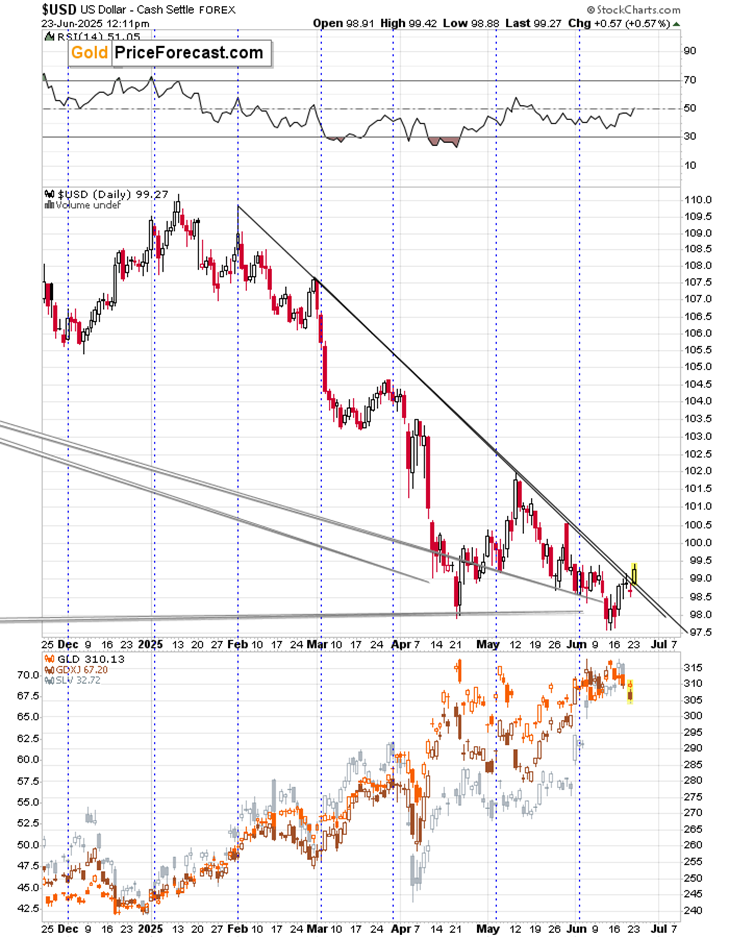
The currency market, however, has registered a notable movement. The USD Index, for instance, has seen a significant uptick, breaking above its declining resistance line, a major technical signal hinting at bullish momentum for the U.S. dollar. This development stands in stark contrast to gold’s performance, traditionally seen as inversely proportional to the value of the dollar.
These market reactions, particularly the unprecedented stance of gold in this scenario, signify a potential shift in investor sentiment. It suggests that, faced with what could arguably be described as the gravest geopolitical crisis since the Cuban Missile Crisis, investors are choosing to sell off gold rather than flock to it as a safe haven. This behavioural shift could be indicative of underlying bearish pressures so potent that they overshadow even the spectre of a potentially escalating conflict.
What does this mean for the future of gold? If the traditional safe haven cannot muster a rally in the face of direct military conflict and the potential for a broader regional war, it begs the question of what scenario, if any, could catalyse a resurgence in its value. The mining sector, particularly seen through the lens of mining stock investors and the performance of instruments like the VanEck Junior Gold Miners ETF, provides a parallel narrative of caution. Recent market activities, including the ETF’s struggle to maintain its peak and the lack of investor enthusiasm, suggest a looming reevaluation of gold’s stronghold as a fail-safe investment option.
This nuanced and complex unfolding of events and market responses could herald the beginning of a broader reassessment of gold’s role in the investment landscape. As tensions in the Middle East simmer, and with the global community keenly watching, the implications of these developments on gold, oil, and the broader financial markets remain a subject of intense speculation and interest. The coming weeks and months will undoubtedly provide critical insights into how traditional assets and safe havens are viewed in the face of evolving global risks and uncertainties.