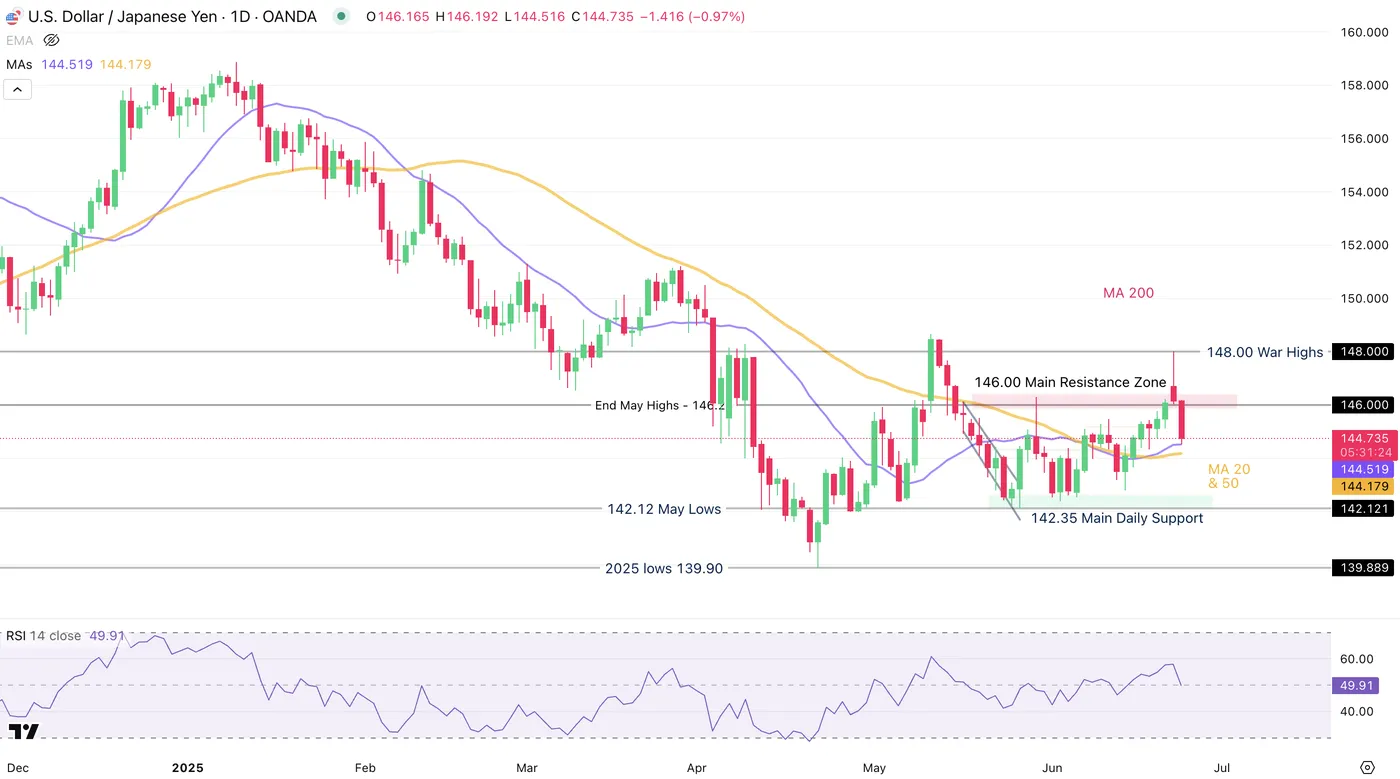
In the ever-fluctuating world of foreign exchange markets, the USD/JPY currency pair recently offered a quintessential demonstration of volatility, experiencing significant shifts within consecutive trading sessions. This dynamism underscores the constant ebbs and flows characteristic of major currency pairs, where factors both domestic and international can precipitate notable changes in value.
Initially, the US dollar showcased a fleeting surge in strength, yet this uptrend was short-lived, as the currency soon resumed its wider downward trajectory when compared against a basket of other major currencies. This trend is emblematic of the broader fluctuations the USD has faced in the wake of various geopolitical and economic shifts.
The continuation of this post-war declining pattern was especially evident following a much-anticipated speech by the Federal Reserve Chairman, Jerome Powell, in front of the US Congress. Market participants had keenly awaited any new indications that might hint at a potential easing of monetary policy during the forthcoming Federal Open Market Committee (FOMC) meeting scheduled for July 30. However, Powell’s remarks offered no fresh insights, compelling traders to interpret this as a signal to continue with the prevailing downward trend against the US dollar.
During this period of the dollar’s retreat, the Japanese yen, which had previously lagged amidst the dollar’s brief rally, engineered a robust recovery. Demonstrating a pronounced V-shaped reversal, the yen surged, positioning itself as one of the top-performing major currencies in the ongoing session, rivalling even the buoyant euro.
An intriguing development occurred with the USD/JPY pair, which found itself retreating back into a familiar trading range after briefly breaking higher, a move that proved deceptive to market watchers.
Delving deeper into the technical aspects of this currency pair, we notice that the daily chart for USD/JPY illuminated a consistent trading range between 142.00 and 146.00. Attempts to break out of this range were quickly repelled, emphasizing the entrenched positions at these levels. This resilience in maintaining the range supports the notion that both buyers and sellers perceive this zone as offering fair value, establishing a sort of equilibrium dictated by their collective actions.
Market anticipation is now centered around potential policy adjustments from the Bank of Japan and expectations of interest rate cuts by the Federal Reserve. In light of these considerations, the path of least resistance for the USD/JPY pair appears to lie within a sideways movement, reflecting a period of consolidation within the identified range.
The four-hour chart provides further insight into the yen’s rebound, highlighting the failure of buyers to propel the currency pair to highs not seen since early May. This technical setback has paved the way for a correction, underscored by the pair’s indecisive movement around the 50-period moving average on this timeframe.
On a more granular level, the one-hour chart depicted a narrow bearish channel developing, an aftermath of market reactions to de-escalation developments in the Middle East. Despite this, hints of a potential reversal were noted, suggesting a complex interplay of market forces at work.
In forex trading, understanding these nuances and the broader geopolitical and economic contexts is crucial for navigating the markets effectively. The USD/JPY pairing’s recent activities offer a rich case study in this regard, providing insight into how external events and policy expectations can shape market dynamics.
As traders and analysts continue to parse through these developments, the overarching message is clear: the foreign exchange market remains a domain of considerable uncertainty, where vigilance and adaptability are invaluable assets. For those venturing into these waters, safe and informed trading practices are paramount, echoing the enduring wisdom that in the world of finance, knowledge is power.