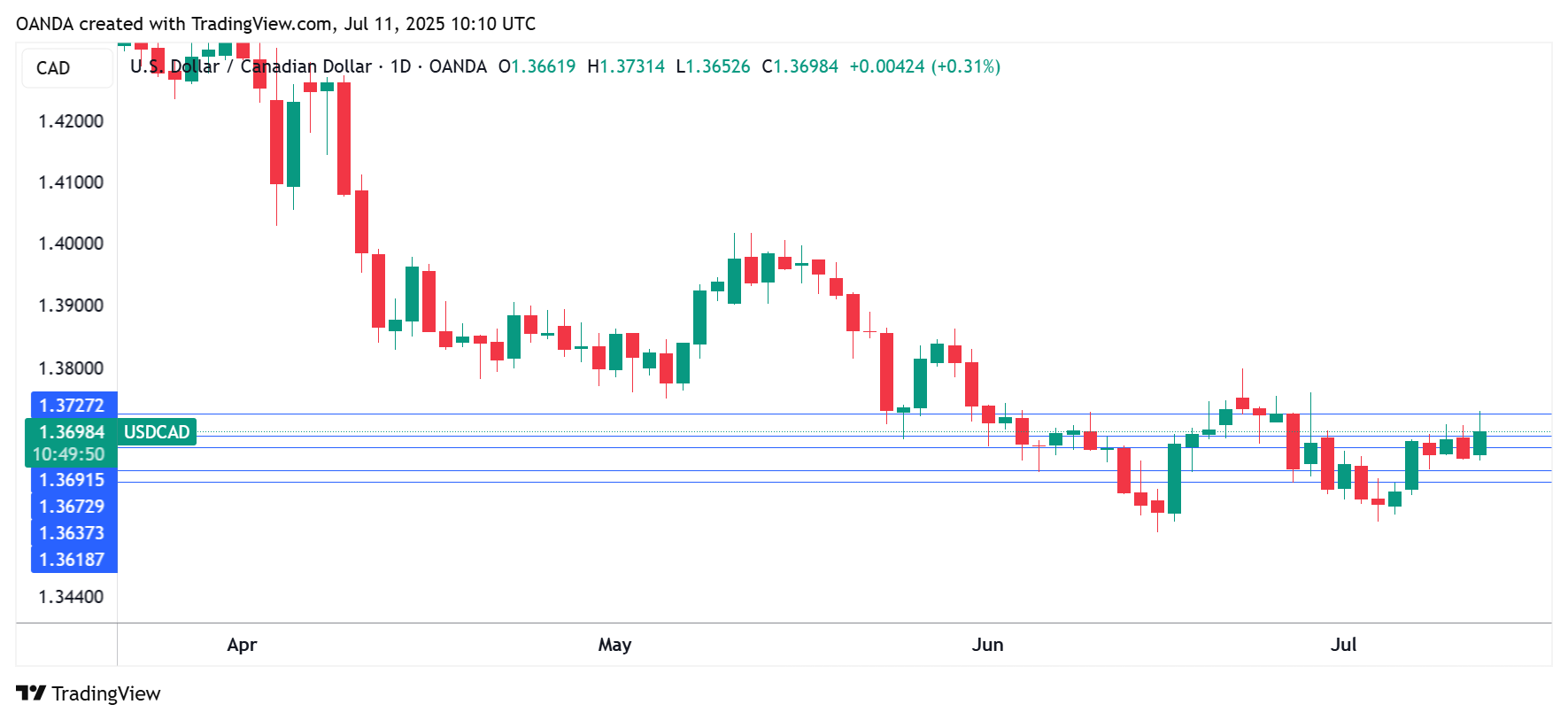
The Canadian economy has witnessed a turbulent period, marked by fluctuations in the Canadian dollar and a series of economic reports that have painted a complex picture of the nation’s fiscal health. Notably, in recent European trading sessions, there’s been a discernible movement in the value of the Canadian dollar, with the currency touching a nadir not seen since late June, trading at 1.3702, indicating a modest uptick of 0.34% for the day.
### The Halt in Canada’s Employment Expansion
Imminently, Canada is poised to unveil its June employment report, a publication that is eagerly anticipated by market observers and policymakers alike. This report carries added weight, following a period from January where job growth has conspicuously plateaued. May’s figures, revealing the addition of a mere 8,800 jobs, have set a precedent for tempered expectations, with consensus forecasts predicting a stagnation in job growth for June. Amidst this employment landscape, the unemployment rate in Canada is inching upwards, with forecasts suggesting a rise to 7.1% from the previous 7.0%, marking a significant uptick from the 6.2% recorded a year earlier.
In the context of these developments, it’s worth noting the background of trade tensions that have loomed large over Canada’s economic outlook. The ongoing discourse between the USA and Canada, notably punctuated by President Trump’s threats to levy a 35% tariff on Canadian goods, underscores a complex dynamic that threatens to exacerbate Canada’s employment woes. The imposition of such tariffs, set to come into effect on the 1st of August, portends a chilling effect on Canada’s economic growth and inflation rates.
### Federal Reserve’s Dilemma: To Cut or Not to Cut Interest Rates
Another dimension to the unfolding economic narrative is the deliberation within the Federal Reserve regarding interest rate adjustments. Despite the market’s leaning towards stability, with a 93% probability pointing towards maintaining the current interest rates, the discourse within the Fed, as unveiled in the minutes from the June meeting, suggests a divergence of opinion. Some members advocate for a rate cut, with expectations gearing towards at least one adjustment before year-end, in light of inflation running at 2.4%, overshooting the Fed’s 2% target.
The broader implications of tariffs on inflation are a subject of keen speculation. To date, tariffs have not exerted a pronounced impact on inflation metrics, although this equilibrium might shift, with forthcoming inflation reports, particularly the June inflation data from the U.S., which is anticipated to edge higher to 2.5%.
### Technical Analysis of the USD/CAD Exchange Rate
Turning to technical analysis of the USD/CAD exchange rate, recent trends indicate a breach above the resistance level of 1.3672, with the currency pair testing further resistance at 1.3691. Should this upward momentum sustain, the next resistance marker is set at 1.3726. Conversely, on the support spectrum, levels at 1.3637 and 1.3718 are earmarked as potential cushions should the pair recede.
This interplay between fiscal policy, employment data, and international trade dynamics paints a multifaceted picture of the Canadian economy. The unfolding economic narratives, underscored by anticipation around job growth figures, interest rate debates within the Federal Reserve, and the specter of escalating trade tensions with the U.S., together weave a complex tapestry of challenges and expectations for Canada. As these developments continue to unfold, the resilience and adaptability of Canada’s economy, against the backdrop of global economic uncertainties, remain subjects of close observation and analysis.