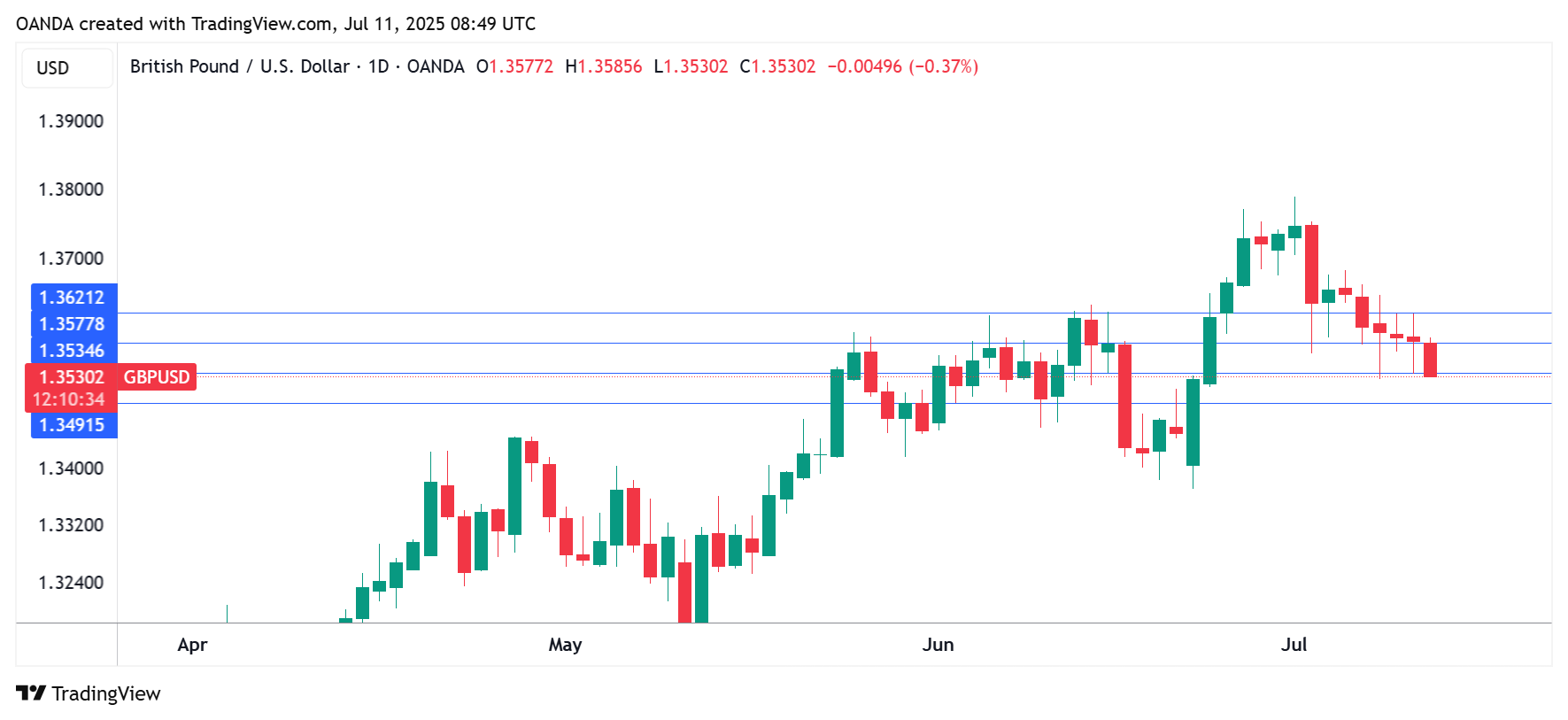
In the realm of global finance, sterling, the currency of the United Kingdom, has been the subject of considerable attention. This interest stems not just from the currency’s fluctuating fortunes but also from the broader economic indicators that offer insight into the health of the British economy. As of the latest trading session in Europe, sterling found itself in a somewhat muted position, trading at 1.3530, marking a minor decline of 0.30% for the day.
### The Economic Pulse of the United Kingdom
The UK’s economic journey has been marked by its share of highs and lows, with recent data indicating a period of contraction that warrants a closer examination. May was a particularly challenging month for the UK economy, which saw a contraction of 0.1% on a month-on-month basis. This downturn followed on the heels of a 0.3% decline observed in April, falling short of the anticipated stagnation at 0.1%. Delving deeper into these figures reveals a troubling picture: manufacturing output decreased by 1%, and construction activity contracted by 0.6%, negating the modest 0.1% growth seen in the services sector.
This back-to-back contraction in April and May signals a potentially weaker second quarter, especially when contrasted with the robust 0.7% growth experienced in the first quarter. The prevailing uncertainties within the economic landscape have prompted the Bank of England (BoE) to forecast a restrained growth outlook, pegging it at 1% for 2025. The Bank’s Governor, Andrew Bailey, has indicated a cautious approach towards the interest rate trajectory, suggesting a gradual decline. However, specifics regarding the timing for the next rate cut remain shrouded in ambiguity.
### Monetary Policy and Inflation Concerns
The UK’s economic data underpins the rationale for a potential adjustment in monetary policy come August. This comes against a backdrop of inflation rates that far exceed the BoE’s comfort zone: headline inflation is currently at 3.4%, with core inflation slightly higher at 3.5%, overshadowing the Bank’s target of 2%. The money markets have already responded, with an 80% expectation priced in for a quarter-point reduction in August, which would bring the cash rate down to 4.0%.
An additional layer of insight was provided earlier in the week when the BoE released its financial stability report. The report painted a nuanced picture of the UK’s economic growth prospects, describing the outlook as “slightly weaker and more uncertain”. This assessment acknowledges various external pressures, including the implications of tariffs introduced by President Trump and the ongoing conflict in the Middle East. Despite these challenges, the UK has managed to secure a trade deal with the US, although certain tariffs on British products continue to persist.
### Sterling in Focus: Technical Analysis
From a technical standpoint, GBP/USD currency pair analysis highlights several critical zones. The pair is currently testing a support level at 1.3534, followed by a further support level at 1.3491 should the former give way. On the flip side, resistance levels are identified at 1.3577 and 1.3620, which could play a pivotal role in the currency pair’s movements in the near term.
### Understanding the Broader Context
The conditions surrounding the British pound and the UK economy are a confluence of domestic and international factors, reflecting the intricate web of global trade, monetary policies, and geopolitical tensions. The Bank of England finds itself in a delicate balancing act, navigating through inflationary pressures and the imperative for economic growth amidst an uncertain global landscape.
The ongoing dialogue between the UK and its international partners, signified by trade negotiations and adjustments to tariff policies, underscores the interconnectedness of national economies and the significant impact such relations have on domestic economic health. As the UK charts its course through these turbulent waters, the movements of sterling and the decisions of the BoE will continue to be watched closely by markets and policymakers alike.
In conclusion, understanding the dynamics at play within the UK economy requires not just a look at the immediate figures but also a comprehension of the underlying factors driving these changes. The subtle interplay between economic growth, inflation, and monetary policy adjustments offers a window into the challenges faced by the UK as it seeks to navigate through an era marked by uncertainty and change. As we continue to monitor these developments, the lessons learned will undoubtedly provide valuable insights into the complexities of modern economies and the policies designed to steer them towards stability and growth.